This post contains affiliate links. As an Amazon Associate, we may earn a commission from qualifying purchases at no extra cost to you.
A great fitness smartwatch does more than tell time. It tracks your heart rate, monitors your sleep, counts your steps, maps your runs, and gives you data that actually helps you train smarter. The problem is the market ranges from $30 to $800+, and not every watch delivers on its promises.
Here’s what separates a genuinely useful fitness smartwatch from an expensive wrist ornament — and our top picks for every budget in 2026.
Why a Fitness Smartwatch Is Worth It
Real-time feedback changes how you train. Knowing your heart rate zone during a workout — not just how you feel — lets you train at the right intensity instead of guessing. That translates directly to better results in less time.
Sleep tracking is underrated. Most people focus on workout metrics, but sleep quality is arguably the single biggest recovery factor. A watch that shows your deep sleep, REM cycles, and resting heart rate trends gives you actionable recovery data.
Accountability and motivation. Step counts, move rings, weekly summaries — the gamification of fitness data works. People who track their activity consistently move more. The data makes it real.
GPS accuracy matters for runners and cyclists. A phone in your pocket isn’t the same as wrist-based GPS. Dedicated fitness watches provide significantly more accurate pace, distance, and route data for outdoor workouts.
Key Features to Look For
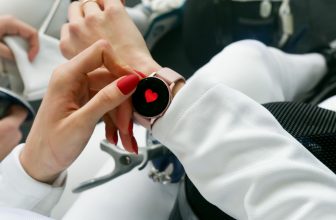
Heart rate monitoring — Optical wrist-based HR monitoring is standard on most fitness watches. For serious training, look for continuous HR monitoring (not just spot checks) and accuracy within 5% of a chest strap at moderate intensity.
GPS — Built-in GPS is essential for runners, cyclists, and hikers who want accurate distance and pace data without carrying a phone. Connected GPS (uses your phone’s GPS) is a cost-saving compromise that works well for most casual users.
Battery life — Smartwatch battery life ranges from 18 hours to 2 weeks depending on features used. If you want always-on display and continuous GPS, expect 1–2 days. If you’re okay with a dimmer display and GPS only during workouts, 5–14 days is realistic.
Water resistance — Look for at least 5ATM water resistance for swimming. Most fitness watches handle sweat and rain fine, but pool and open water swimming requires specific water resistance ratings.
App ecosystem — Apple Watch works exclusively with iPhone. Garmin, Fitbit, and Samsung work with both iOS and Android. If you’re an iPhone user, Apple Watch integration is seamless. Android users have more flexibility.
Health sensors — Beyond HR, premium watches add blood oxygen (SpO2), ECG, skin temperature, and stress monitoring. Useful if you want comprehensive health data, but not essential for basic fitness tracking.
Types of Fitness Smartwatches
Full Smartwatches
Apple Watch, Samsung Galaxy Watch — these are smartphones on your wrist. Calls, texts, apps, payments, and fitness tracking in one device. Highest functionality, shortest battery life, highest price.
GPS Sports Watches
Garmin, Polar, Suunto — purpose-built for athletic performance. Exceptional GPS accuracy, long battery life, detailed training metrics. Less smartphone functionality but deeper fitness data.
Fitness Trackers with Smart Features
The middle ground — more fitness data than a basic tracker, more battery life than a full smartwatch, at a lower price point. Good for general health monitoring without serious athletic training needs.
Budget Fitness Smartwatches
Under $50 options that cover the basics — step counting, sleep tracking, HR monitoring, smartphone notifications. Accuracy and build quality vary significantly at this price point.
Our Top Picks for 2026
| Smartwatch | Type | Battery Life | Best For | Link |
|---|---|---|---|---|
| Apple Watch Series (GPS) | Full Smartwatch | 18 hrs | Best overall | View on Amazon |
| Touchscreen Fitness Tracker Smartwatch | Budget Tracker | 7 days | Best budget pick | View on Amazon |
| Garmin Forerunner 55 GPS Running Watch | GPS Sports Watch | 20 hrs GPS | Best for runners | View on Amazon |
| Apple Watch SE | Full Smartwatch | 18 hrs | Best for iPhone users | View on Amazon |
How to Get the Most Out of Your Fitness Smartwatch
Wear it to sleep. Most people only track workouts but skip sleep monitoring. Wearing your watch overnight unlocks recovery scores, resting heart rate trends, and sleep quality data that’s just as valuable as workout metrics.
Set heart rate zones. Most GPS watches let you configure custom HR zones based on your max heart rate. Training in the right zone — not just “hard” — is what separates structured training from just moving.
Review weekly summaries. The real value of a fitness watch isn’t the real-time data — it’s the trends. Weekly and monthly summaries show patterns (overtrained? under-recovering? activity declining?) that are invisible day to day.
Calibrate GPS before your first run. Step outside and wait for a GPS lock before starting your workout. Starting GPS tracking indoors and then going outside causes the first portion of your route to be inaccurate.
Keep firmware updated. Fitness watch manufacturers regularly push updates that improve sensor accuracy, add features, and fix bugs. Check for updates monthly.
Frequently Asked Questions
Does a smartwatch actually improve fitness?
Research consistently shows that people who track their activity move more. A smartwatch doesn’t make you fit — but it creates accountability, provides feedback, and makes progress visible in ways that motivate consistent behavior.
Is Apple Watch or Garmin better for fitness?
For iPhone users who want seamless integration and general fitness tracking, Apple Watch is hard to beat. For serious runners, cyclists, or outdoor athletes who need precise GPS data and long battery life, Garmin is the better choice.
Can a smartwatch detect heart problems?
Some premium watches offer ECG (electrocardiogram) and irregular heart rhythm notifications that can flag potential atrial fibrillation. These are screening tools — not medical devices — but several cases of serious heart conditions being caught early have been attributed to smartwatch alerts.
How accurate are smartwatch heart rate monitors?
Quality wrist-based optical HR monitors are accurate within 5–10% during steady-state exercise. During high-intensity intervals and strength training, accuracy drops due to wrist movement. Chest strap monitors remain the gold standard for precision.
How long do fitness smartwatches last?
Most quality smartwatches last 3–5 years before battery degradation or software obsolescence becomes an issue. Budget watches typically last 1–2 years. Garmin watches are known for exceptional longevity — some users run their Garmins for 7+ years.