This post contains affiliate links. As an Amazon Associate, we may earn a commission from qualifying purchases at no extra cost to you.
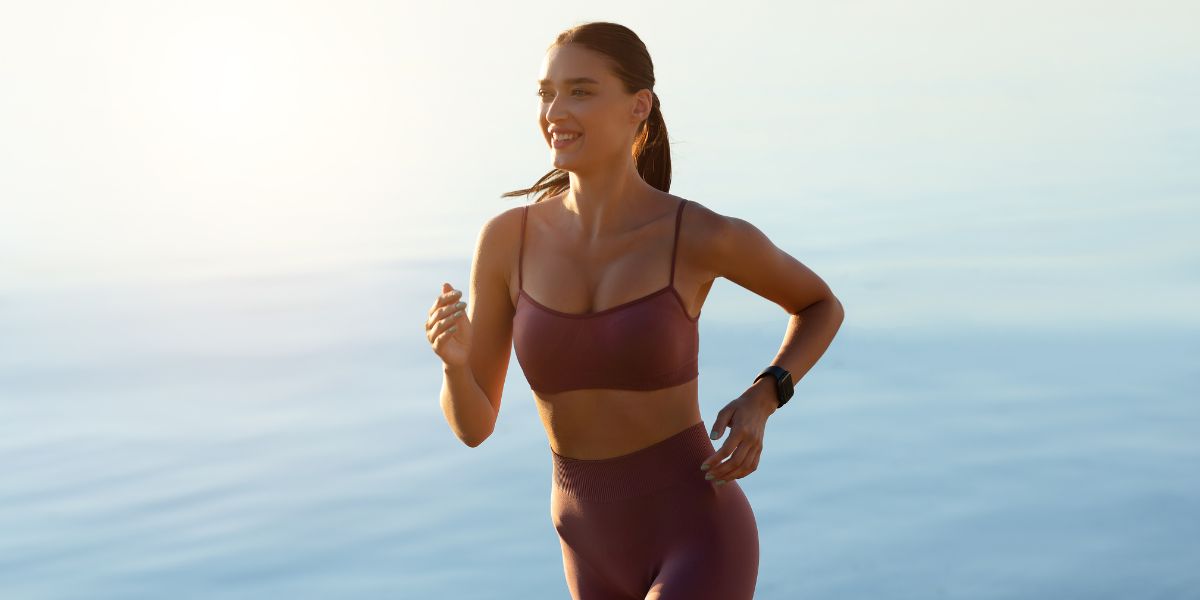
A sports bra is arguably the most important piece of workout clothing a woman can own — and also the most frequently gotten wrong. The wrong support level for your activity causes discomfort, distraction, and long-term ligament damage that doesn’t reverse. The right one disappears into your workout so you can focus on what actually matters.
Here’s everything you need to know about choosing the right sports bra, and our top picks for 2026.
Why Sports Bra Support Level Matters
Breast tissue is supported by Cooper’s ligaments — connective tissue that doesn’t have significant elasticity and doesn’t repair itself once stretched. Inadequate support during high-impact activity causes progressive, cumulative ligament damage over time. This isn’t a comfort issue — it’s a structural one.
The solution is matching your bra’s support level to your activity’s impact level. Not every workout needs maximum support, and maximum support during yoga is unnecessarily restrictive. The right fit for the right activity is the whole ballgame.
Impact Levels Explained
Low impact — yoga, Pilates, walking, stretching, weight training. Minimal breast movement. A light support bra with a comfortable fit is all you need.
Medium impact — cycling, hiking, dance fitness, elliptical. Moderate movement requiring more control than a low-impact bra but not the full structure of a high-impact option.
High impact — running, HIIT, jumping, plyometrics, CrossFit. Maximum movement requiring encapsulation (each breast supported individually) or strong compression, or ideally both.
Types of Sports Bras
Compression Bras
Press breast tissue against the chest to minimize movement. Simple construction, usually pullover style, best for low to medium impact and smaller cup sizes. Less effective for larger cup sizes during high-impact activity.
Encapsulation Bras
Individual cups support each breast separately — similar to a regular bra structure. More effective for larger cup sizes and high-impact activity. Often have underwire or structured cups.
Combination Bras
Both compression and encapsulation in one design. The gold standard for high-impact activity, especially for larger cup sizes. More complex construction but maximum support and comfort.
Racerback Bras
The back strap design pulls toward the center, keeping straps on the shoulders during movement. Better for high-intensity activities than straight-back strap designs that slide off.
Wire-Free Bras
No underwire — rely on fabric structure and compression for support. More comfortable for many women, especially during longer sessions. Modern wire-free designs can provide excellent high-impact support without the discomfort of traditional underwire.
What to Look for When Buying
Cup size availability — Many sports bras only come in S/M/L/XL sizing which doesn’t account for cup size. For larger busts (D cup and above), look for bras with specific cup sizing (32D, 34DD etc) for proper encapsulation and support.
Band width — A wider band distributes support across more surface area and reduces pressure on straps. For high-impact activity, a wider band is significantly more comfortable than a narrow one.
Strap adjustability — Adjustable straps let you customize fit for your body. Non-adjustable straps are fine for smaller cup sizes and low impact but limiting for anything more demanding.
Moisture wicking — Non-negotiable for any workout. Fabric that holds moisture causes chafing and skin irritation during longer sessions.
Ease of on/off — A sports bra you dread putting on or taking off is one you’ll avoid wearing. Clasps, zippers, and front closures all improve wearability.
Underwire comfort — If the bra has underwire, it should sit flat against your sternum and ribcage with no digging or lifting. Underwire that doesn’t sit flat indicates the wrong cup size.
Our Top Picks for 2026
| Sports Bra | Support Level | Best For | Link |
|---|---|---|---|
| Racerback Sports Bra with Removable Pads | High impact | Best overall | View on Amazon |
| SYROKAN Underwire Racerback Sports Bra | High impact | Best for running | View on Amazon |
| RUNNING GIRL Criss-Cross Sports Bra | Low-medium impact | Best for yoga | View on Amazon |
| Heathyoga Medium Impact Sports Bra | Medium impact | Best budget | View on Amazon |
How to Find Your Sports Bra Size
Band size — Measure around your ribcage directly under your bust. Round to the nearest even number — that’s your band size.
Cup size — Measure around the fullest part of your bust. Subtract your band size from this measurement. Each inch of difference = one cup size (1 inch = A, 2 inches = B, 3 inches = C, 4 inches = D, 5 inches = DD/E).
Fit check — The band should be snug and horizontal (not riding up at the back). Cups should fully contain breast tissue with no spillage or gaps. Straps should not dig in or slip off. You should be able to fit two fingers under the band.
The bounce test. Jump up and down in the fitting room. If there’s significant movement, try a higher support level or a smaller band size. This is the most reliable test of whether a sports bra will actually work for your activity.
Sports Bra Care Tips
Wash after every wear. Sweat and bacteria break down elastic fibers and cause permanent odor. Wash promptly rather than letting them sit in a gym bag.
Hand wash or use a lingerie bag. Machine washing without a lingerie bag stretches and twists straps and damages underwire casing. A mesh lingerie bag protects structure during machine washing.
Cold water only. Hot water degrades elastic, spandex, and underwire casing significantly faster than cold.
Never put in the dryer. Heat destroys elastic permanently. Always air dry flat or hanging. This single habit doubles the lifespan of a sports bra.
Replace every 6–12 months with regular use. When the band loses elasticity and rides up, or the cups lose their shape, support is gone regardless of how the bra looks.
Frequently Asked Questions
Do I need a different sports bra for different activities?
Ideally yes — a high-impact bra for running and HIIT, a comfortable low-impact bra for yoga and lifting. In practice, a good high-impact bra works for everything even if it’s overkill for low-intensity activity. A low-impact bra used for running is where problems occur.
Is underwire bad for sports bras?
Not inherently — properly fitted underwire provides excellent support. Poorly fitted underwire that digs in or lifts away from the body is the problem. If underwire is uncomfortable, it’s usually a sizing issue rather than a design issue.
How do I know if my sports bra is worn out?
The band stretches to the tightest hook and still feels loose, the cups lose their shape, or the bra rides up during activity. At that point, the structural support is gone and it’s time to replace regardless of how it looks.
Can I wear a regular bra for working out?
For low-impact activities, yes. For anything involving significant movement — running, jumping, HIIT — a regular bra doesn’t provide the structural support or moisture management that a proper sports bra does.
What’s the best sports bra for large busts?
Look for combination bras with underwire or structured cups, specific cup sizing (not just S/M/L), wide bands, and adjustable straps. Brands that specialize in larger cup sports bras include Panache, Freya, and Elomi — all offer dedicated sports lines for DD+ cups.