This post contains affiliate links. As an Amazon Associate, we may earn a commission from qualifying purchases at no extra cost to you.
Collagen is the most abundant protein in your body — it’s the structural framework holding your skin, joints, tendons, ligaments, and bones together. After your mid-20s, your body produces progressively less of it, which is why skin loses elasticity, joints become stiffer, and recovery from injury takes longer as you age.
Collagen supplements have exploded in popularity over the last decade. But do they actually work? Here’s what the science actually says — and our top picks for 2026.
What Is Collagen and Why Does It Matter?
Collagen is a fibrous protein made of amino acids — primarily glycine, proline, and hydroxyproline — that forms long chains giving skin its firmness, cartilage its cushioning, and tendons their tensile strength.
Your body produces collagen naturally, but production declines at roughly 1% per year after your mid-20s. By your 40s, you’re producing meaningfully less than you were at 25. This decline contributes to:
- Skin losing elasticity and developing fine lines
- Joint cartilage thinning and becoming less cushioned
- Tendons and ligaments becoming less flexible
- Slower wound healing and tissue recovery
- Hair becoming thinner and more brittle
Supplemental collagen provides the amino acid building blocks your body uses to produce new collagen. Whether supplemented collagen actually reaches the specific tissues you want it to is the key question the research has been working to answer.
What the Research Actually Shows
Skin. This is where the evidence is strongest. Multiple randomized controlled trials show oral collagen supplementation (5–10g daily for 8–12 weeks) improves skin hydration, elasticity, and reduces the appearance of wrinkles. The improvement is modest but consistent and measurable.
Joints. Type II collagen specifically has shown promise for reducing joint pain and improving function in people with osteoarthritis and exercise-related joint discomfort. Studies using 10–40mg of undenatured Type II collagen daily show meaningful symptom reduction.
Hair and nails. Evidence here is less robust but suggests collagen supports the structural proteins in hair and nails, reducing brittleness and potentially supporting growth. More research is needed.
Muscle. Collagen is not a complete protein — it’s low in leucine and essential amino acids needed for muscle protein synthesis. It does not replace whey or plant protein for muscle building and shouldn’t be used as a primary protein supplement.
Gut health. Collagen contains glycine and glutamine which support intestinal lining integrity. Some evidence supports collagen for gut health, though research is still developing.
Types of Collagen
Type I — the most abundant in the body. Found in skin, tendons, ligaments, and bones. Most relevant for skin, hair, and nail benefits.
Type II — found primarily in cartilage. Most relevant for joint health and reducing joint pain.
Type III — found alongside Type I in skin and blood vessels. Supports skin elasticity.
Type IV — found in the basement membrane of cells. Less relevant for supplementation.
Multi-collagen blends — combine Types I, II, III, and sometimes V and X. Cover multiple benefits in one product. Popular for people wanting comprehensive support.
What to Look for When Buying
Hydrolyzed collagen peptides — collagen that’s been broken down into smaller peptides for better absorption. Look for “hydrolyzed” or “collagen peptides” on the label — these absorb significantly better than unprocessed collagen.
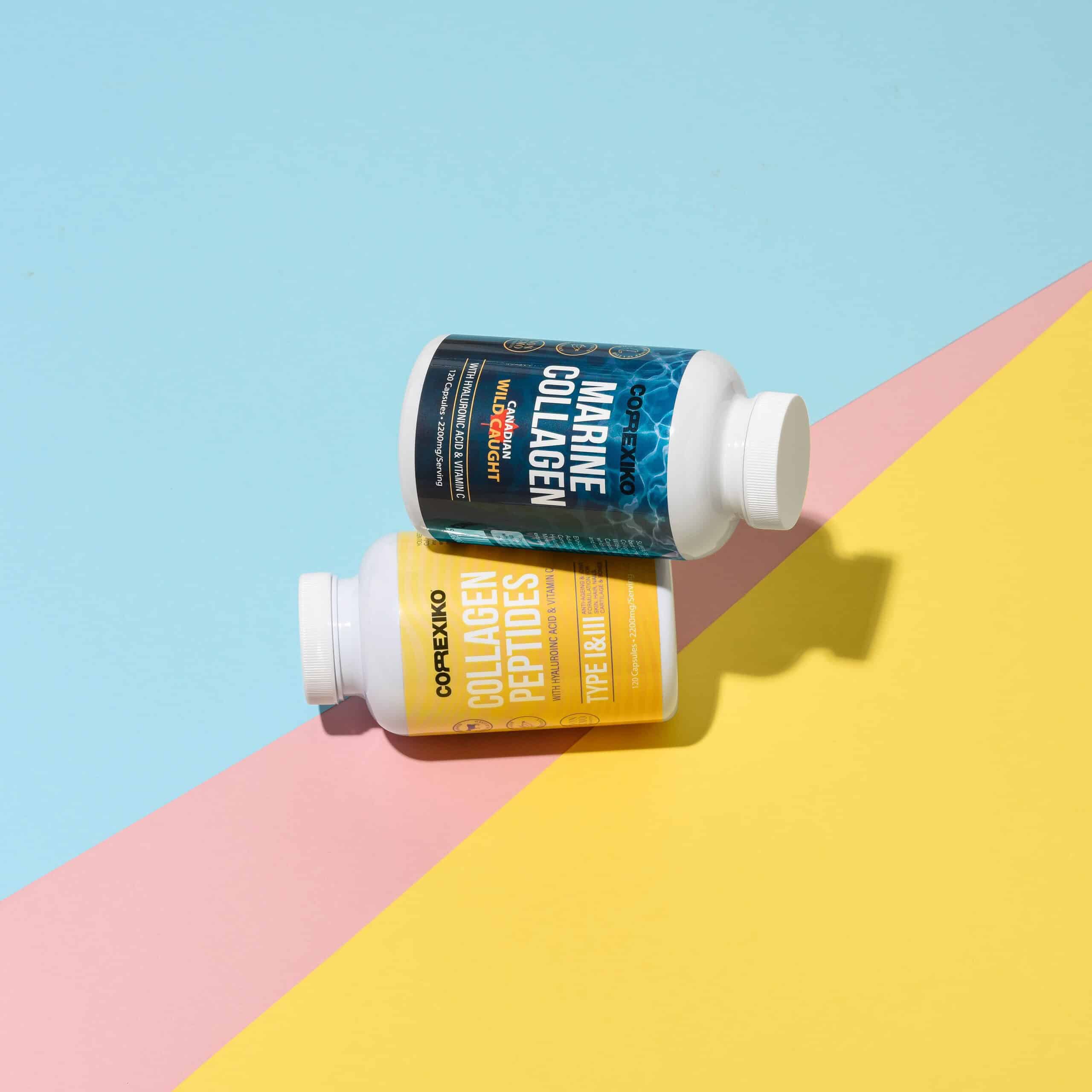
Source — bovine (cow) collagen is richest in Types I and III. Marine (fish) collagen is primarily Type I and absorbs quickly. Chicken collagen is richest in Type II. Eggshell membrane collagen contains Types I, V, and X.
Molecular weight — lower molecular weight peptides absorb more efficiently. Premium products specify this; budget products typically don’t.
Third-party testing — especially important for marine collagen which can carry heavy metal contamination if poorly sourced. NSF or USP certification matters here.
Vitamin C inclusion — Vitamin C is required for collagen synthesis in the body. Products that include Vitamin C or taking Vitamin C alongside collagen may enhance the benefit.
Grass-fed / wild-caught sourcing — not strictly necessary for effectiveness but indicates higher quality manufacturing standards overall.
Our Top Picks for 2026
| Collagen Supplement | Type | Form | Best For | Link |
|---|---|---|---|---|
| Collagen Peptides Powder | Type I & III | Powder | Best overall | View on Amazon |
| Ancient Nutrition Multi-Collagen Capsules | Multi (I,II,III) | Capsules | Best for joints | View on Amazon |
| Vital Vitamins Multi-Collagen Complex | Multi (I,II,III,V,X) | Capsules | Best capsule option | View on Amazon |
| Nutricost Collagen Hydrolysate Powder | Type I & III | Powder | Best budget | View on Amazon |
How to Take Collagen Effectively
Consistency matters more than timing. Daily supplementation for at least 8–12 weeks is what the research uses. Occasional use produces minimal benefit.
Take with Vitamin C. Vitamin C is a required cofactor for collagen synthesis. Taking collagen alongside Vitamin C (from food or supplements) may enhance your body’s ability to use the amino acids you’re providing.
Mix into hot or cold liquids. Hydrolyzed collagen peptides dissolve easily in coffee, tea, smoothies, or water without affecting taste or texture — making daily use easy.
Dose — 5–10g daily is the standard research dose for skin benefits. Joint-specific Type II collagen studies often use lower doses (10–40mg of undenatured Type II specifically).
Set realistic expectations. Collagen won’t reverse decades of aging in 4 weeks. The research shows modest, consistent improvements over 8–12 weeks of daily use — not dramatic transformations.
Frequently Asked Questions
How long does collagen take to work?
Most research shows measurable improvements in skin elasticity and hydration after 8–12 weeks of daily supplementation. Joint benefits may take longer — 12–24 weeks in some studies.
Is collagen vegan?
No — all commercially available collagen is animal-derived (bovine, marine, chicken, or eggshell). Vegan “collagen boosters” contain nutrients that support your body’s own collagen production (Vitamin C, zinc, copper) but don’t contain actual collagen.
Does cooking destroy collagen?
Hydrolyzed collagen peptides are stable under heat — you can add them to hot coffee or cook with them without degrading the amino acids.
Is marine collagen better than bovine collagen?
Marine collagen has a smaller peptide size and may absorb slightly faster. Bovine collagen provides more volume per serving and covers Types I and III effectively. Both are well-researched and effective — the difference is minor.
Can collagen supplements cause side effects?
Generally very well tolerated. Some people experience mild digestive discomfort initially. Those with fish or shellfish allergies should avoid marine collagen. People with kidney disease should consult a physician before high-dose supplementation.