This post contains affiliate links. As an Amazon Associate, we may earn a commission from qualifying purchases at no extra cost to you.
Essential oils have moved well beyond the wellness niche into mainstream fitness and recovery culture — and with good reason. While they’re not a replacement for sleep, nutrition, and training, the right oils used consistently can meaningfully reduce muscle soreness, lower cortisol, improve sleep quality, and support the recovery process between sessions.
Here’s what the research actually shows, how to use them, and our top picks for 2026.
What Are Essential Oils?
Essential oils are concentrated plant extracts — the volatile aromatic compounds found in flowers, bark, leaves, seeds, and roots — captured through steam distillation or cold pressing. Each oil contains dozens to hundreds of distinct chemical compounds that interact with your body through inhalation (via the olfactory system and lungs) or topical application (absorbed through the skin).
They are not pharmaceuticals and shouldn’t be treated as such. But the dismissal of essential oils as purely placebo is not supported by the current research — several oils have well-documented physiological effects that are relevant to fitness and recovery.
What the Research Shows
Peppermint and performance. A 2013 study published in the Journal of the International Society of Sports Nutrition found that athletes who ingested peppermint oil showed improved grip strength, standing vertical jump, and running performance. Inhaling peppermint has also been shown to increase alertness and reduce perceived exertion during exercise.
Lavender and sleep quality. Multiple randomized controlled trials show lavender inhalation improves sleep quality, increases slow-wave sleep, and reduces nighttime cortisol. Since sleep is the primary driver of muscle recovery, anything that genuinely improves sleep has direct fitness relevance.
Eucalyptus and inflammation. Eucalyptus contains 1,8-cineole, a compound with anti-inflammatory and analgesic properties. Topical application (diluted in a carrier oil) to sore muscles has shown reduction in pain and inflammation in several studies.
Frankincense and cortisol. Boswellic acids in frankincense have demonstrated anti-inflammatory effects and cortisol reduction in clinical settings. Relevant for athletes managing training stress and chronic inflammation.
Rosemary and circulation. Rosemary oil applied topically improves local circulation — useful for warming up muscles before training and promoting recovery blood flow to sore areas afterward.
How to Use Essential Oils for Recovery
Aromatherapy (Diffuser)
The most common method. Add 3–5 drops to an ultrasonic diffuser with water and run for 30–60 minutes. Best for stress relief, sleep improvement, and respiratory support. See our Best Aromatherapy Diffusers guide for diffuser recommendations.
Topical Application
Always dilute with a carrier oil (coconut, jojoba, sweet almond) before applying to skin — typically 2–3 drops of essential oil per teaspoon of carrier oil. Apply to sore muscles and massage in gently. Never apply undiluted essential oils directly to skin — this causes irritation and sensitization.
Inhalation
Add a drop or two to your palms, rub together, cup over your nose and mouth, and breathe deeply for 30–60 seconds. Most direct delivery method for acute effects like alertness or pre-workout focus.
Massage
Mix into a massage oil blend and apply during foam rolling or self-massage post-workout. The combination of massage and essential oil creates synergistic recovery effects.
Bath Soak
Add 5–10 drops (diluted in a carrier oil or bath salts first) to a warm bath for full-body muscle relaxation. Epsom salt + lavender + eucalyptus is a classic post-workout recovery combination.
Essential Oils for Specific Recovery Goals
For muscle soreness: Peppermint, eucalyptus, rosemary, ginger, black pepper
For sleep and recovery: Lavender, cedarwood, vetiver, frankincense, bergamot
For stress and cortisol: Lavender, bergamot, frankincense, ylang ylang, clary sage
For focus and pre-workout energy: Peppermint, rosemary, lemon, orange, spearmint
For inflammation: Eucalyptus, frankincense, turmeric, copaiba, helichrysum
What to Look for When Buying
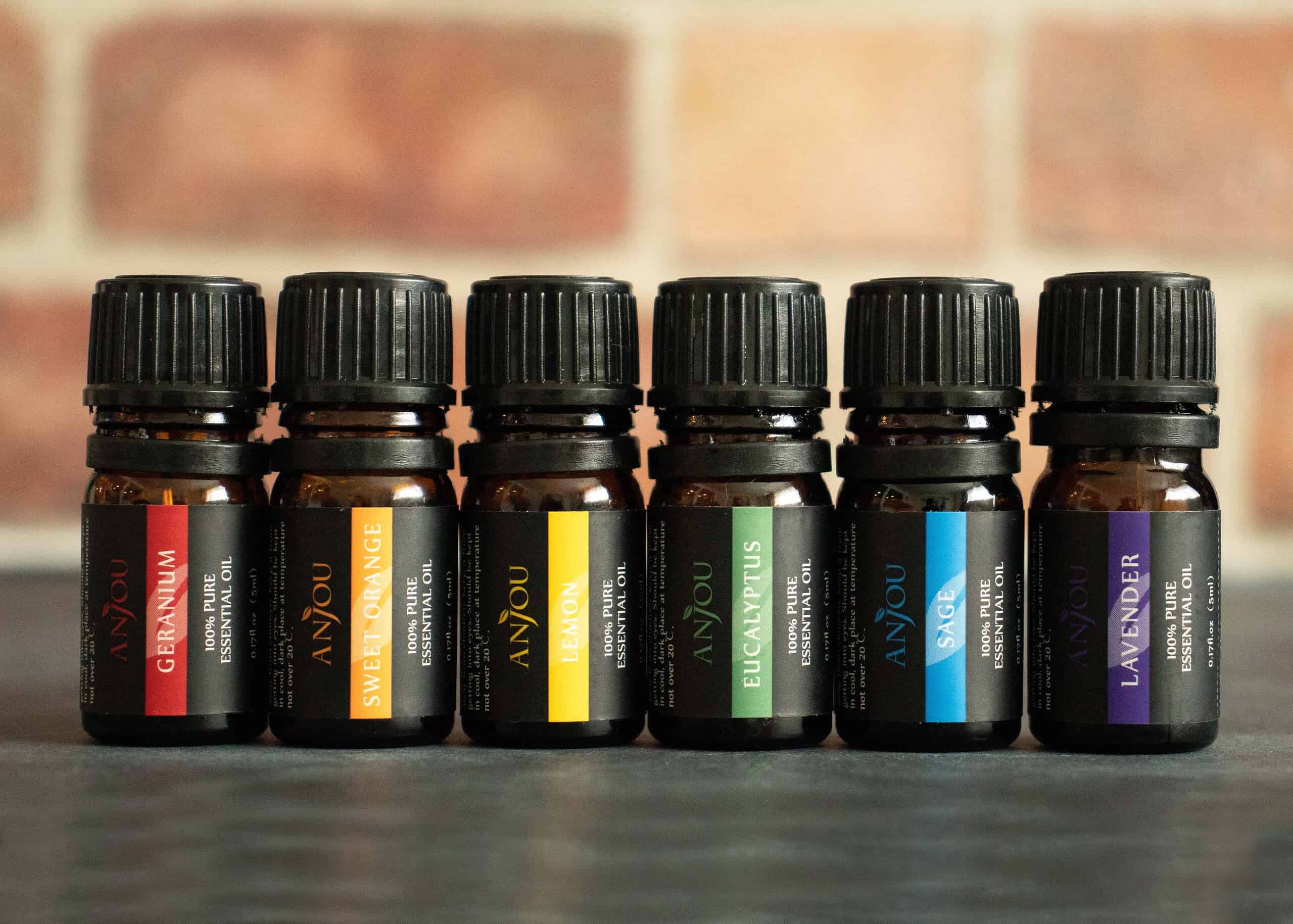
100% pure essential oil — the label should say “100% pure” with no added synthetic fragrances, carrier oils, or diluents. Fragrance oils are not essential oils and don’t provide therapeutic benefits.
Latin name listed — quality oils list the botanical (Latin) name of the plant (e.g., Lavandula angustifolia for true lavender). This confirms exactly which plant species was used — important because many plants share common names.
GC/MS testing — Gas Chromatography/Mass Spectrometry testing verifies the chemical composition of the oil and confirms purity. Reputable brands either test in-house or use third-party labs and make results available.
Country of origin — different regions produce oils with different chemical profiles. Bulgarian lavender, Moroccan eucalyptus, and Indian peppermint are known for quality. Country of origin on the label indicates a more transparent supply chain.
Dark glass bottles — essential oils degrade with light exposure. Quality oils are packaged in amber or cobalt blue glass bottles. Avoid oils in clear glass or plastic containers.
Price reality check — quality essential oils aren’t cheap to produce. A 10ml bottle of pure rose or sandalwood for $5 is almost certainly synthetic or diluted. Lavender and peppermint are more affordable to produce — expect $10–$20 for a quality 10–15ml bottle.
Our Top Picks for 2026
| Essential Oil | Best Use | Size | Best For | Link |
|---|---|---|---|---|
| Lagunamoon Essential Oils Set | Multi-purpose | 6-pack | Best overall set | View on Amazon |
| Majestic Pure Peppermint Essential Oil | Muscle recovery & focus | 4 oz | Best for recovery | View on Amazon |
| Majestic Pure Bulgarian Lavender Oil | Sleep & stress relief | 4 oz | Best for sleep | View on Amazon |
| Handcraft Blends Eucalyptus Oil | Inflammation & breathing | Large bottle | Best value single oil | View on Amazon |
Essential Oil Safety
Always dilute for topical use. Undiluted essential oils cause skin irritation, burns, and sensitization — a reaction that worsens with repeated exposure and can become permanent. The standard dilution is 2% — about 12 drops per ounce of carrier oil.
Patch test new oils. Apply a small diluted amount to the inside of your wrist and wait 24 hours before wider application. Individual sensitivities vary significantly.
Keep away from eyes and mucous membranes. If contact occurs, flush with carrier oil (not water — water drives the oil deeper) and seek medical attention if irritation persists.
Pregnancy and children. Many essential oils are contraindicated during pregnancy and for children under 2. Consult a healthcare provider before use in these populations.
Pets. Cats and dogs are highly sensitive to many essential oils — particularly tea tree, eucalyptus, peppermint, and citrus. Keep diffusers and topical applications away from pets or research pet-safe alternatives specifically.
Don’t ingest without professional guidance. Internal use of essential oils is a specialized area with significant risk if done incorrectly. The aromatherapy and topical methods described above are safe for general use without medical supervision.
Frequently Asked Questions
Do essential oils actually work for muscle recovery or is it placebo?
For specific oils and specific applications, the evidence goes beyond placebo. Peppermint’s performance effects, lavender’s sleep benefits, and eucalyptus’s anti-inflammatory properties are supported by clinical research. The magnitude of effect is moderate — essential oils support recovery, they don’t replace it.
What’s the best essential oil for sore muscles?
Peppermint and eucalyptus are the most evidence-backed for topical muscle application. Dilute 2–3 drops of each in a teaspoon of coconut oil and massage into sore areas after training.
How long do essential oils last?
Most oils last 1–3 years properly stored (cool, dark, tightly sealed). Citrus oils degrade faster (6–12 months). Sandalwood and patchouli actually improve with age. The oil going rancid — off smell, changed color — indicates degradation.
Can I use essential oils before working out?
Yes — peppermint specifically has pre-workout applications for focus and alertness. Avoid applying oils to skin before high-intensity training as sweat can cause diluted oils to migrate toward eyes.
Are expensive essential oils better?
Not always — but extremely cheap oils are almost certainly impure. Mid-range brands with GC/MS testing and transparent sourcing provide quality without the premium brand markup. Price is a necessary but not sufficient indicator of quality.