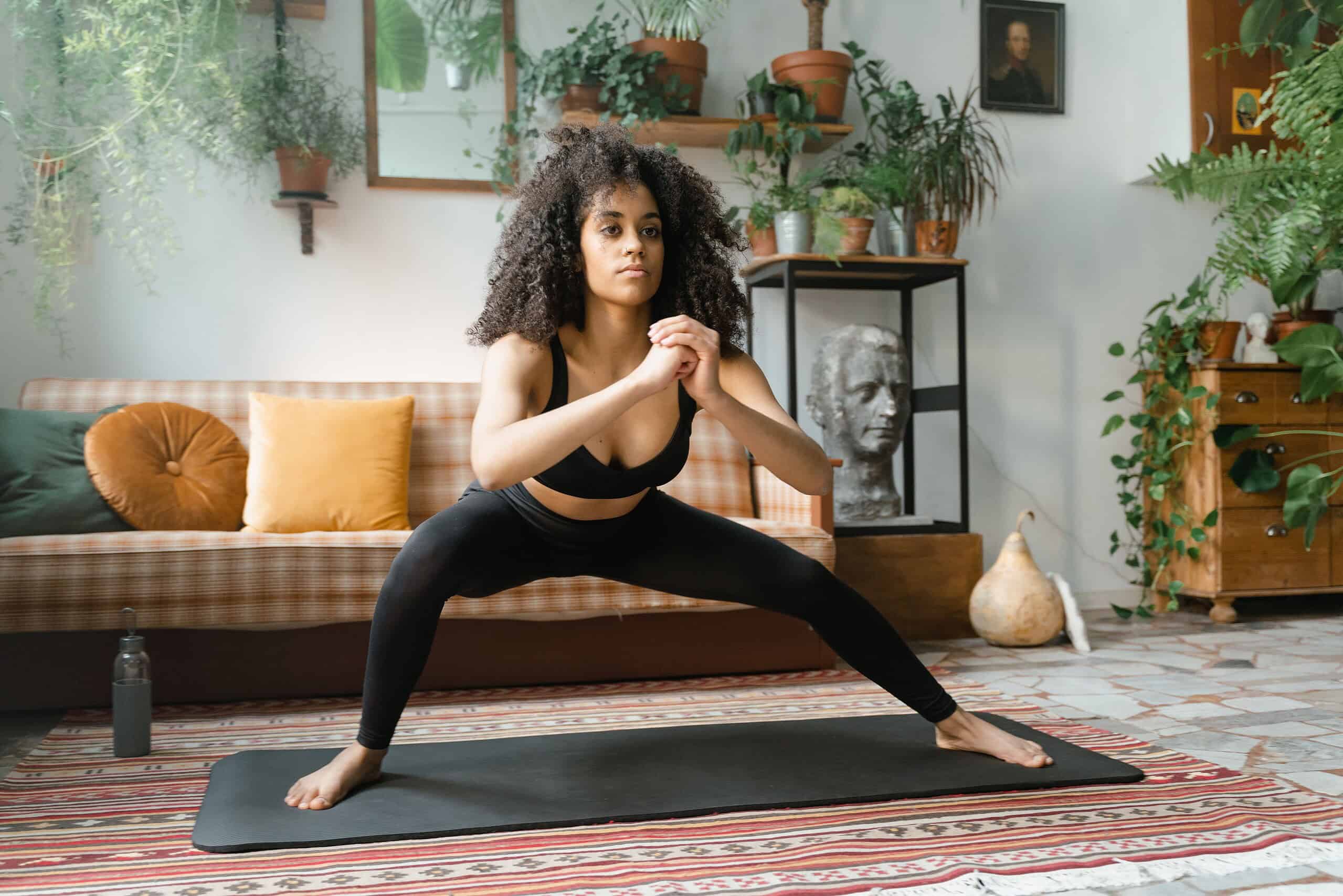
This post contains affiliate links. As an Amazon Associate, we may earn a commission from qualifying purchases at no extra cost to you.
Starting a home workout routine is one of the best decisions you can make for your health — and one of the easiest to overcomplicate. You don’t need a fully equipped gym, an expensive program, or two hours a day. You need a plan, a small amount of space, and the willingness to start before you feel ready.
Here’s everything a beginner needs to know to start working out at home and actually stick with it.
Why Home Workouts Work Better Than Most People Expect
The biggest barrier to consistent exercise isn’t motivation — it’s friction. Every obstacle between you and your workout reduces the probability that you’ll actually do it. A home workout removes the commute, the parking, the locker room, the waiting for equipment, and the social anxiety of being a beginner in a public space.
Remove enough friction and consistency becomes almost automatic. That’s the real advantage of training at home — not the equipment or the space, but the elimination of every excuse that was previously available.
Step 1 — Set a Realistic Goal
Before buying anything or starting any program, get specific about what you actually want.
Vague goal: “I want to get fit.”
Specific goal: “I want to lose 15 lbs in 4 months” or “I want to do 10 pull-ups” or “I want to exercise 4 days per week consistently for 3 months.”
Specific goals have measurable outcomes that tell you whether you’re succeeding. They also help you choose the right program and equipment for your actual situation rather than a generic one.
The most important goal for beginners: Build the habit first. Fitness results take 8–12 weeks to become visible. The habit of showing up — even imperfectly — is what gets you there. Set a process goal (I will work out 3 times per week for 8 weeks) rather than only an outcome goal.
Step 2 — Choose Your Training Style
Different goals require different approaches. Pick the one that matches what you’re actually trying to accomplish:
For fat loss: A combination of resistance training and cardio. Resistance training preserves muscle while you lose fat — critical for maintaining a healthy metabolism. Cardio burns additional calories and improves cardiovascular health. Aim for 3 days of resistance training and 2–3 days of cardio per week.
For muscle building: Progressive resistance training — gradually increasing the weight or difficulty of your exercises over time. 3–4 days per week of structured strength training with adequate protein intake. See our Best Protein Powders for Weight Loss guide for nutrition support.
For general fitness and health: A balanced mix of strength, cardio, and flexibility work. 3–5 days per week with variety across movement types. The most sustainable approach for most people.
For stress relief and flexibility: Yoga, mobility work, and low-intensity cardio. 4–6 days per week of shorter, gentler sessions. Highly sustainable and deeply beneficial for mental health.
Step 3 — Start With Bodyweight
Before buying a single piece of equipment, master bodyweight training. Every fundamental movement pattern can be trained without equipment:
Push (chest, shoulders, triceps): Push-ups, pike push-ups, diamond push-ups
Pull (back, biceps): Door rows, Superman holds, doorframe pull-ups
Squat (quads, glutes): Bodyweight squats, split squats, jump squats
Hinge (hamstrings, glutes): Good mornings, single-leg deadlifts, hip bridges
Core: Planks, dead bugs, mountain climbers, hollow holds
Cardio: Jumping jacks, high knees, burpees, jump rope
A beginner can make significant progress for 4–8 weeks on bodyweight alone before needing any equipment. This also gives you time to understand which movements you enjoy and which you struggle with — valuable information for making smart equipment purchases later.
Step 4 — Build Your First Program
A beginner program doesn’t need to be complicated. Here’s a simple 3-day-per-week full body program that requires zero equipment:
Day 1 — Full Body A
- Push-ups: 3 sets of 8–12 reps
- Bodyweight squats: 3 sets of 15 reps
- Door rows or Superman: 3 sets of 10 reps
- Hip bridges: 3 sets of 15 reps
- Plank: 3 holds of 20–30 seconds
Day 2 — Rest or light walk
Day 3 — Full Body B
- Pike push-ups: 3 sets of 8–10 reps
- Reverse lunges: 3 sets of 10 reps each leg
- Dead bugs: 3 sets of 8 reps each side
- Single-leg hip bridges: 3 sets of 10 each leg
- Mountain climbers: 3 sets of 20 seconds
Day 4 — Rest or light walk
Day 5 — Cardio + Core
- Jump rope or jumping jacks: 3 rounds of 2 minutes
- High knees: 3 rounds of 30 seconds
- Burpees: 3 sets of 5–8 reps
- Hollow body hold: 3 holds of 20 seconds
- Side plank: 2 holds of 20 seconds each side
Day 6–7 — Rest
Run this program for 4–6 weeks, gradually increasing reps or sets each week. When you can complete all sets at the top of the rep range with good form, you’re ready to add resistance.
Step 5 — Add Equipment Strategically
Once bodyweight training feels manageable, equipment dramatically expands your options. Add in this order:
First purchase — resistance bands ($15–$25):
The single best value in home fitness. Adds resistance to every bodyweight movement and enables dozens of new exercises. See our Best Resistance Bands guide.
Second purchase — pull-up bar ($25–$50):
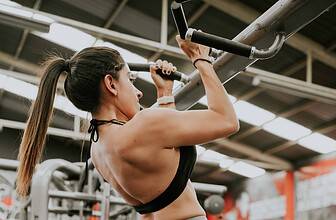
The most effective upper body pulling movement available. See our Best Pull-Up Bars guide.
Third purchase — dumbbells ($30–$150):
Unlocks the full spectrum of strength training movements. See our Best Dumbbells guide.
Step 6 — Track Your Progress
What gets measured gets improved. Track these things consistently:
Workouts completed — a simple calendar with an X on each workout day. Visual streaks are surprisingly motivating.
Exercise performance — record your sets, reps, and weights in a notebook or app. Progressive overload (doing more over time) is the mechanism of fitness improvement.
Body measurements — weight, waist circumference, and photos every 4 weeks. Scale weight alone is misleading — measurements and photos show changes the scale misses.
Energy and sleep quality — subjective but important. Regular exercise should improve both within 2–4 weeks. If it’s not, something about the program needs adjustment.
Step 7 — Handle the Common Pitfalls
The soreness trap. Being sore after your first few workouts is normal — but extreme soreness that makes daily movement painful means you did too much too soon. Start easier than you think you need to and build gradually.
The all-or-nothing mindset. Missing one workout doesn’t ruin anything. Missing a week doesn’t ruin anything. The only workout that doesn’t count is the one you never start. A 15-minute workout on a busy day is infinitely better than nothing.
Doing too much too soon. Enthusiasm in week one leads to injury in week two. 3 days per week of moderate effort consistently produces far better results than 6 days per week of maximum effort for two weeks followed by burnout.
Not having a program. Randomly doing whatever you feel like each session produces inconsistent results. Follow a structured program for at least 8 weeks before evaluating whether it’s working.
Comparing yourself to others. Your fitness journey is measured against your previous self — not against someone who’s been training for 5 years or was a college athlete. Progress relative to where you started is the only meaningful metric.
Frequently Asked Questions
How long should a beginner workout be?
30–45 minutes is the sweet spot for beginners — long enough to be effective, short enough to be sustainable. You can get an excellent workout in 20 minutes if you stay focused. Don’t judge workout quality by duration.
How many days per week should a beginner exercise?
3 days per week is the evidence-based starting point. It provides enough stimulus for progress while allowing adequate recovery. Build to 4–5 days per week over several months as your fitness improves.
Do I need to warm up?
Yes — 5 minutes of light movement (jumping jacks, leg swings, arm circles, hip circles) before every session reduces injury risk and improves performance. It’s not optional, especially for beginners whose connective tissue isn’t yet adapted to training stress.
How long until I see results?
You’ll feel results (more energy, better sleep, improved mood) within 2–3 weeks. You’ll see results (visible body composition changes) in 6–12 weeks of consistent training and appropriate nutrition. Fitness is a slow process — the people who succeed are the ones who commit to it long enough to see the results.
Is working out at home as effective as going to a gym?
For most people’s goals — fat loss, general fitness, building a base of strength — yes, absolutely. Elite athletes and serious powerlifters or bodybuilders may eventually need equipment a home gym can’t provide. For everyone else, consistency matters infinitely more than the specific equipment available.