This post contains affiliate links. As an Amazon Associate, we may earn a commission from qualifying purchases at no extra cost to you.
Exercise balls — also called stability balls, Swiss balls, or fitness balls — are one of the most versatile and underused pieces of fitness equipment available. They cost under $40, take up minimal space when deflated, and deliver real benefits for core strength, balance, flexibility, and back pain relief.
Here’s what to look for and our top picks for 2026.
Why an Exercise Ball Belongs in Your Home Gym
Core activation in everything you do. Because an exercise ball is unstable, your core muscles engage constantly to keep you balanced — even during exercises that wouldn’t normally target your core. A dumbbell chest press on a ball engages your abs and stabilizers significantly more than the same movement on a bench.
Back pain relief. Exercise balls are widely recommended by physical therapists for lower back pain management. Gentle stretching and core-strengthening movements on a ball decompress the spine and strengthen the muscles that support it.
Active sitting. Replacing your office chair with an exercise ball (or a ball chair with a base) engages your core and improves posture throughout the workday — turning sedentary sitting into low-level active work.
Stretching and flexibility. Draping yourself over an exercise ball for thoracic extension, hip flexor stretches, and spinal decompression delivers stretches that are difficult or impossible to replicate on a flat surface.
Pregnancy and postpartum fitness. Exercise balls are widely used in prenatal and postnatal exercise programs due to their gentleness, versatility, and ability to support the body in comfortable positions.
What to Look for When Buying
Size — This is the most important variable. The correct size depends on your height:
- Under 5’0″ → 45cm ball
- 5’0″–5’5″ → 55cm ball
- 5’5″–6’0″ → 65cm ball (most common)
- Over 6’0″ → 75cm ball
When sitting on the ball, your hips and knees should be at roughly 90-degree angles. If your knees are higher than your hips, go up a size. If your hips are significantly higher than your knees, go down.
Anti-burst construction — Non-negotiable. Cheap balls can pop suddenly under load — a serious safety risk. Anti-burst (also called slow-deflate) balls are made with thicker PVC that deflates slowly if punctured rather than exploding. Always check for this before buying.
Weight capacity — Standard balls handle 250–300 lbs. If you’re heavier or plan to use the ball for weighted exercises, look for heavy-duty options rated 600–2000 lbs.
Texture — Smooth balls are easier to clean. Textured or ribbed surfaces provide better grip during dynamic exercises.
Included accessories — A pump is essential (balls ship deflated). A base ring keeps the ball stationary when not in use and prevents it from rolling away. Many starter kits include both.
Best Exercises for Core and Back Pain
Core strengthening:
- Ball crunch — lie back on the ball, perform crunches with full range of motion
- Ball plank — forearms on the ball, body in plank position — significantly harder than floor plank
- Ball pass — lying on your back, pass the ball from hands to feet and back
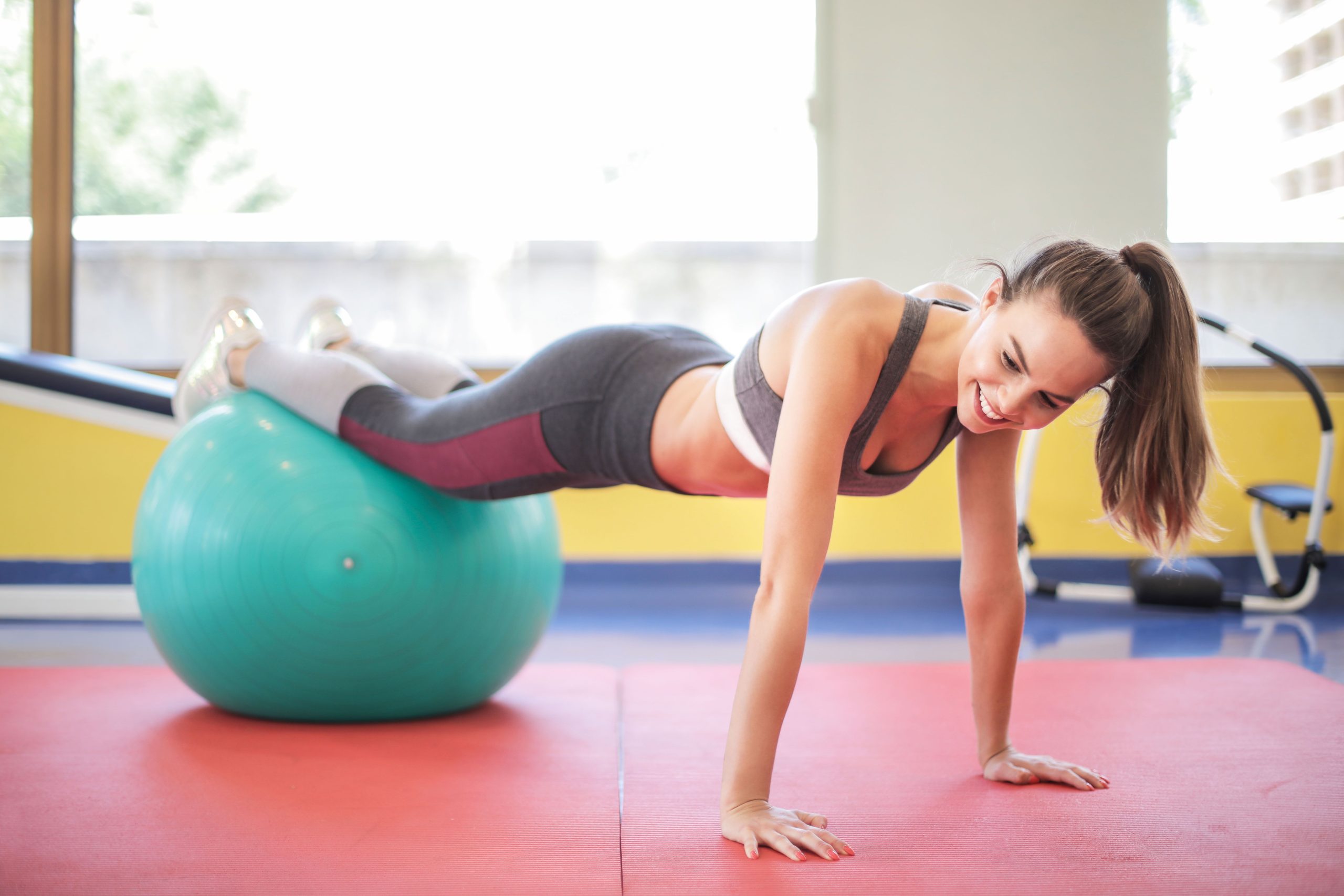
- Pike — feet on ball, hands on floor, roll ball toward chest
Back pain relief:
- Spinal extension — lie face-down over the ball, arms at sides, gently extend your back
- Child’s pose on ball — kneel behind the ball, drape arms over it and rock forward
- Hip circles — sit on ball, make slow circles with your hips in both directions
- Lower back stretch — sit on ball, slowly walk feet forward until your back is resting on the ball
Balance and stability:
- Wall squat with ball — ball between your back and wall, squat to 90 degrees
- Single-leg balance — sit on ball, lift one foot slightly, hold 30 seconds
- Overhead press on ball — seated on ball, press dumbbells overhead
Our Top Picks for 2026
| Exercise Ball | Size Options | Weight Capacity | Best For | Link |
|---|---|---|---|---|
| ProBody Pilates Exercise Ball | 45–75cm | 2000 lbs | Best overall | View on Amazon |
| Trideer Ball Chair with Stability Ring | 55–75cm | 2200 lbs | Best starter kit with ring | View on Amazon |
| Gaiam Classic Balance Ball Chair | 65cm | Standard | Best for office use | View on Amazon |
| BalanceFrom Anti-Burst Exercise Ball | 55–75cm | 2000 lbs | Best heavy duty | View on Amazon |
Safety Tips for Exercise Ball Use
Check inflation regularly. An underinflated ball is unstable and can bottom out during exercises. An overinflated ball is more likely to burst. Inflate to the specified diameter, not until it feels drum-tight.
Use on a clean, flat surface. Sharp objects on the floor — grit, staples, small toys — can puncture even anti-burst balls. Check your floor before every use.
Don’t sit too close to edges. When using the ball as a chair or for seated exercises, keep your feet flat on the floor and positioned wider than shoulder-width for stability.
Deflate slightly for storage. Storing a fully inflated ball long-term in a hot space (like a garage in Phoenix summer) can stress the material. Slightly deflating it extends its life significantly.
Frequently Asked Questions
What size exercise ball do I need?
Height is the primary guide — see the size chart above. When in doubt, go one size up. A slightly larger ball is more forgiving than one that’s too small.
Can an exercise ball replace my office chair?
For short periods, yes — and the core engagement benefits are real. For full-day sitting, most physical therapists recommend alternating between a ball and a supportive chair rather than replacing it entirely. Prolonged unsupported sitting on a ball can fatigue your back muscles.
How long do exercise balls last?
A quality anti-burst ball used regularly indoors typically lasts 3–5 years. Exposure to sunlight, heat, and sharp surfaces dramatically shortens lifespan.
Can I do weighted exercises on an exercise ball?
Yes — dumbbell presses, rows, and curls are all commonly performed on exercise balls. Check the weight capacity of your specific ball before adding external weight. Heavy-duty balls rated for 600+ lbs are recommended for any loaded exercises.
Is an exercise ball good for lower back pain?
It can be highly effective when used for appropriate exercises — particularly gentle mobility work, core strengthening, and spinal decompression. However, for acute or severe back pain, consult a physical therapist before starting an exercise ball routine.