This post contains affiliate links. As an Amazon Associate, we may earn a commission from qualifying purchases at no extra cost to you.
If you’re choosing between a rowing machine and an elliptical for your home gym, you’re looking at two of the best low-impact cardio options available. Both are joint-friendly, both burn serious calories, and both work better for some people than others. The right choice depends entirely on your goals, your fitness level, and how your body responds to each movement.
Here’s an honest breakdown of both.
How Each Machine Works
The Rowing Machine
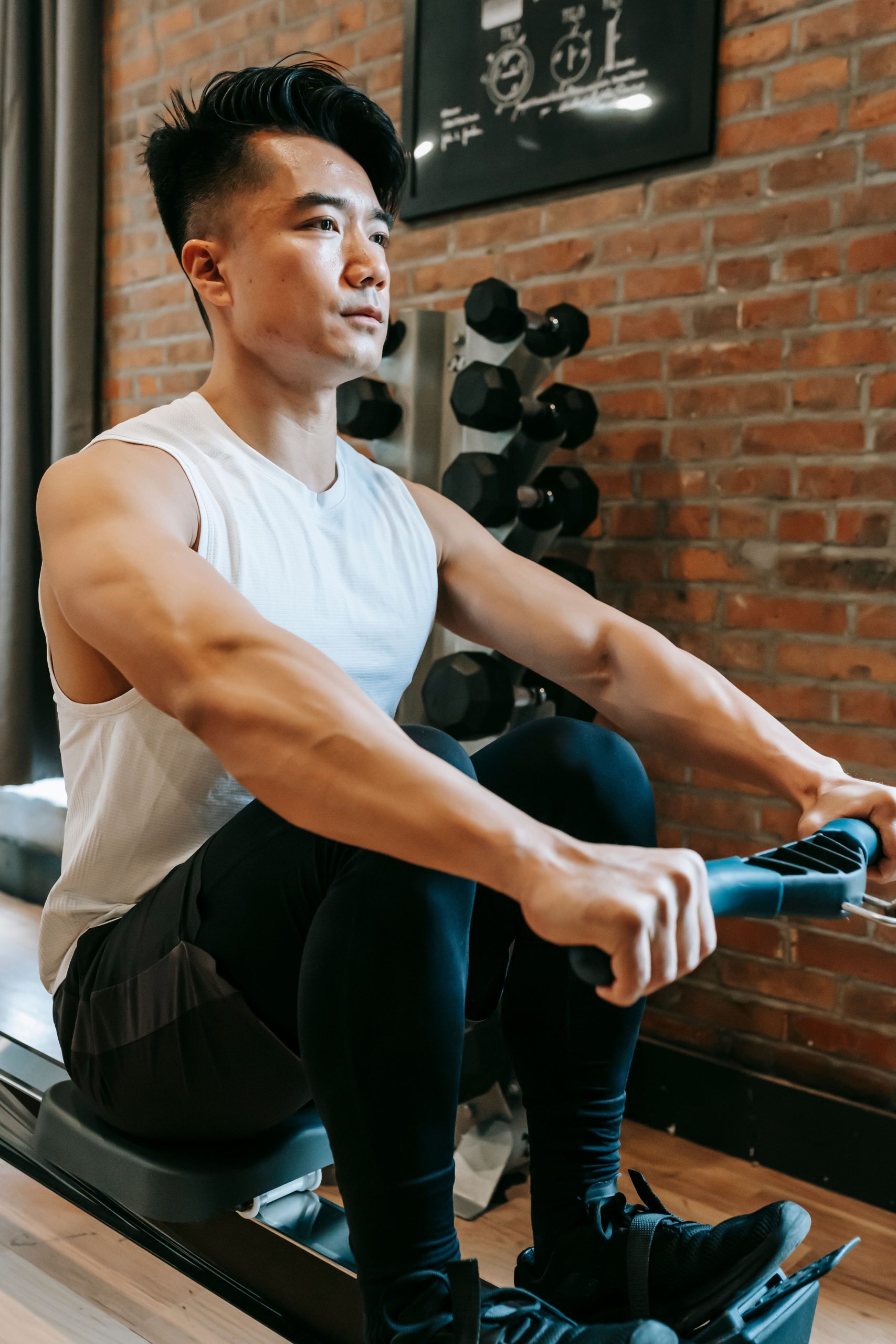
A rowing machine (also called an ergometer or “erg”) simulates the motion of rowing a boat. You sit on a sliding seat, brace your feet on footplates, and drive through a sequence of leg push, body lean, and arm pull. The movement is a full-body compound exercise that engages roughly 86% of your muscles in every stroke.
The catch: rowing requires real technique. A beginner rowing with poor form — typically pulling with the arms first instead of driving with the legs — gets a fraction of the benefit and risks lower back strain. The learning curve is real but short — most people get the basic mechanics in one or two sessions.
The Elliptical
An elliptical trainer moves your legs in an oval (elliptical) path that mimics walking or running without the impact. Most models include moving handlebars that add an upper body pushing and pulling motion. You step on, start moving, and the machine guides your motion — there’s almost no technique learning curve.
The elliptical is deliberately designed to feel familiar and accessible. That’s its biggest strength and, for some users, its biggest weakness.
Where the Rowing Machine Wins
Full-body muscle engagement. Rowing works legs, glutes, core, back, shoulders, and arms in every single stroke. The elliptical, even with arm handles, is primarily a lower-body machine. If building upper body endurance and burning maximum calories is the goal, rowing wins decisively.
Calorie burn. A vigorous rowing session burns 400–600 calories per hour for most adults — comparable to running and significantly more than elliptical at equivalent perceived effort.
Core strength. Every rowing stroke requires active core bracing to transfer power from legs to arms. Over time this builds genuine functional core strength, not just cardio fitness.
Mental engagement. Rowing has a rhythm and a technique component that many people find more mentally engaging than the repetitive motion of an elliptical. Less likely to feel like a chore.
Compact footprint. Most rowing machines are narrower than ellipticals and store vertically or fold flat — better for small spaces.
Best for: Athletes, people who want full-body conditioning, those looking for maximum calorie burn, anyone who finds ellipticals boring.
Where the Elliptical Wins
Zero learning curve. Step on and go. No coaching required, no form to learn, no risk of doing it wrong. This matters enormously for consistency — if using the machine feels complicated, it won’t get used.
Joint comfort. The elliptical’s guided oval motion is possibly the most joint-friendly cardio movement available. For people with significant knee, hip, or ankle issues, an elliptical is often the only high-intensity option that doesn’t cause pain.
Lower back friendly. People with chronic lower back problems often struggle with rowing — the hip hinge and forward lean position can aggravate existing issues. The elliptical’s upright posture is much easier on the lumbar spine.
Longer sustainable sessions. Because the motion is so natural and low-effort to maintain, most people can sustain elliptical sessions longer than rowing sessions. More time = more total calories burned for some users.
Upper and lower body simultaneously. While rowing is more intense, the elliptical’s arm handles do engage your upper body meaningfully — especially chest, shoulders, and triceps on the push phase.
Best for: Beginners, people with joint or back issues, those who want simple consistent daily cardio, older users.
Head-to-Head Comparison
| Category | Rowing Machine | Elliptical |
|---|---|---|
| Calories burned (vigorous) | ✓ Higher (~500/hr) | Lower (~400/hr) |
| Full-body engagement | ✓ Superior | Moderate |
| Learning curve | Moderate | ✓ None |
| Joint impact | Very low | ✓ Lowest |
| Lower back friendliness | Moderate | ✓ Better |
| Core strength built | ✓ Excellent | Minimal |
| Space required | ✓ Less | More |
| Mental engagement | ✓ Higher | Lower |
| Beginner-friendly | Moderate | ✓ Very |
| Price range | $300–$1,500 | $400–$2,000 |
So Which Should You Buy?
Choose a rowing machine if:
- You want maximum calorie burn and full-body conditioning
- You’re reasonably fit and willing to spend 1–2 sessions learning proper form
- Space is limited — rowing machines are generally more compact
- You get bored easily and want a more engaging workout
- Your lower back is healthy and you want to build core strength
Choose an elliptical if:
- You’re a beginner or returning to exercise after a long break
- You have knee, hip, ankle, or lower back issues
- You want to jump on and go without thinking about technique
- You prefer longer, sustainable sessions over intense shorter ones
- Other people in your household will also use the machine — the elliptical’s accessibility makes it more likely to get shared use
The honest answer for most home gym users: If you’re healthy and motivated, a rowing machine delivers more fitness benefit per minute. If you’re managing any joint or back issues, or if consistency is your biggest challenge, an elliptical wins because you’ll actually use it every day.
A Note on Combining Both
If budget and space allow, the combination of a rowing machine and a set of dumbbells covers virtually every fitness goal — full-body strength, cardio conditioning, and flexibility work. The elliptical pairs better with a strength training setup for people who need low-impact cardio as a complement to lifting.
For our top rowing machine picks, visit our Rowing Machines category. For elliptical options, see our Elliptical Training Machines category.
Frequently Asked Questions
Is rowing or elliptical better for weight loss?
Rowing burns slightly more calories at equivalent effort levels, giving it a modest edge for weight loss. However, the best machine for weight loss is always the one you’ll use most consistently — consistency beats intensity every time.
Can beginners use a rowing machine?
Yes, but take 15–20 minutes to learn proper form first. Search “rowing machine form for beginners” on YouTube — Concept2’s official tutorials are excellent. Bad rowing form is a fast route to lower back pain.
Which machine is quieter?
Air resistance rowers are the loudest. Magnetic resistance rowers are much quieter — comparable to an elliptical. If noise matters, specify magnetic resistance when shopping for a rower.
Do ellipticals build muscle?
They maintain muscle and build endurance but aren’t particularly effective for muscle growth. For building muscle, resistance training with dumbbells or kettlebells is significantly more effective.
How long should I use a rowing machine or elliptical per session?
20–45 minutes at moderate intensity, 3–5 times per week, is the standard recommendation for cardiovascular fitness. Rowing sessions tend to be shorter due to higher intensity; elliptical sessions can run longer comfortably.