This post contains affiliate links. As an Amazon Associate, we may earn a commission from qualifying purchases at no extra cost to you.
A home gym is one of the best investments you can make in your long-term fitness — and one of the most misunderstood. Most people think it requires a spare room, a big budget, and a lot of equipment. None of that is true. The best home gym is the one you’ll actually use consistently, and that starts with understanding what you actually need versus what the fitness industry wants you to buy.
Here’s how to build a home gym at every budget level — from $50 to $500+ — with zero wasted money.
Why a Home Gym Beats a Commercial Gym Membership for Most People
No commute. The average gym member spends 20–30 minutes driving to and from the gym per session. That’s 3–4 hours per week that a home gym gives back. For busy parents and full-time workers, that time difference is the difference between training consistently and not training at all.
No waiting. No waiting for equipment, no interrupted supersets, no awkward interactions while you’re mid-set. Your home gym is always available exactly the way you set it up.
No membership fees. The average gym membership costs $50–$80/month. A $300 home gym investment pays for itself in 4–6 months and then generates ROI indefinitely.
Train on your schedule. 5am before the kids wake up, 10pm after they go to bed, 12 minutes during a lunch break — a home gym works on your schedule, not the gym’s hours.
Privacy. Learning new movements, trying new programs, or training through an injury is significantly less intimidating in your own space.
The Core Principle: Minimum Effective Dose
The single biggest home gym mistake is buying equipment you don’t use. Before spending anything, answer these questions:
- What are your actual goals — fat loss, muscle building, general fitness, sport performance?
- How many days per week will you realistically train?
- What movements do you actually enjoy doing?
- How much space do you have available?
Your answers determine what you actually need. A person doing 3 weekly strength sessions needs completely different equipment than someone doing daily HIIT workouts. Buy for how you actually train, not for an aspirational version of yourself.
Budget Level 1 — The $50–$100 Starter Gym
You can build a genuinely effective training setup for under $100. This is not a compromise — it’s a focused investment in the highest-return equipment available.
The $50–$100 essential list:
- Resistance bands set ($15–$25) — covers upper and lower body exercises, stretching, and mobility work. The highest return-on-investment piece of fitness equipment available.
- Jump rope ($10–$20) — complete cardio solution in a piece of equipment that fits in a pocket.
- Yoga mat ($20–$35) — your training surface for floor work, stretching, yoga, and bodyweight exercises.
What you can do with this setup: full-body resistance training, cardio, mobility work, and stretching. This covers the vast majority of fitness goals for beginners and intermediate trainees.
See our product guides:
Budget Level 2 — The $100–$250 Serious Starter
Adding one or two key pieces dramatically expands what you can do:
Best additions at this level:
- A pair of adjustable dumbbells or 2–3 fixed dumbbell pairs ($50–$150) — unlocks the full range of pressing, rowing, curling, and hinging movements that resistance bands can’t fully replicate.
- Doorframe pull-up bar ($25–$50) — upper back, biceps, and core work that no other piece of equipment in this price range matches.
- Foam roller ($20–$40) — recovery tool that extends the value of every other workout you do.
What you can do with this setup: complete strength training across all major muscle groups, cardio, mobility, and recovery. This is a legitimate full-body training setup.
See our product guides:
Budget Level 3 — The $250–$500 Complete Home Gym
At this level you’re building a setup that rivals most commercial gyms for general fitness purposes:
Best additions at this level:
- Adjustable dumbbell set ($100–$200) — replaces an entire dumbbell rack. Essential if you’ve outgrown fixed pairs.
- Kettlebell (one or two) ($30–$60) — adds swing-based explosive training that dumbbells don’t replicate.
- Exercise mat ($30–$50) — thicker than a yoga mat, better for floor-based strength work.
- Pull-up bar upgrade or power tower ($80–$150) — more stability and added dip station functionality.
What you can do with this setup: virtually everything a commercial gym offers for non-machine-dependent training. Strength, power, cardio, mobility, and recovery.
See our product guides:
Budget Level 4 — The $500+ Performance Gym
If budget allows and you’re training seriously, these additions dramatically expand your capacity:
- Cardio machine ($200–$800) — exercise bike, treadmill, or rowing machine depending on your cardio preference. See our Best Exercise Bikes and Best Treadmills guides.
- Weight bench ($100–$200) — unlocks flat, incline, and decline pressing movements that are difficult or impossible without one.
- Barbell and weight plates ($150–$300) — for serious strength athletes who need progressive loading beyond what dumbbells allow.
- Squat rack ($300–$600) — the centerpiece of a serious strength training gym. Space and budget permitting, nothing replaces it for barbell work.
Space Planning
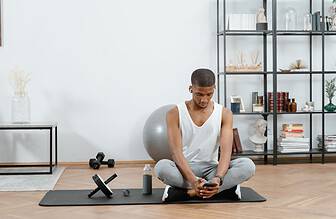
Minimum viable space: A 6×6 foot area (36 sq ft) is enough for resistance bands, a yoga mat, and bodyweight work.
Comfortable training space: 8×10 feet (80 sq ft) accommodates dumbbells, a pull-up bar, and floor work comfortably.
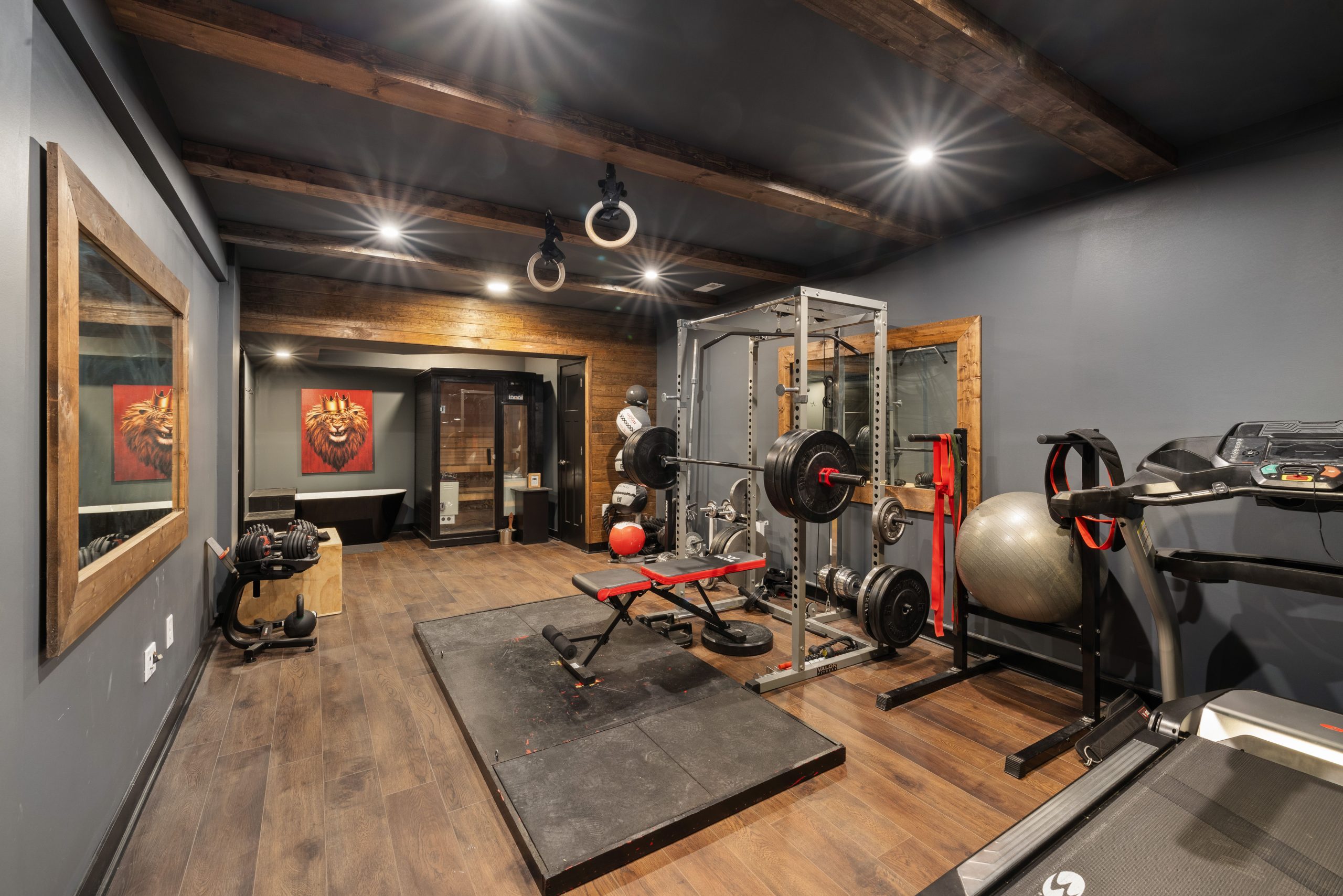
Full gym space: 10×12 feet (120 sq ft) or more for cardio equipment, a bench, and a rack.
Flooring — rubber gym flooring ($1–3 per square foot) protects your floor, reduces noise, and provides a stable training surface. Worth the investment for any permanent setup.
Equipment Priority Order
If budget requires prioritization, buy in this order:
- Resistance bands (highest ROI, lowest cost)
- Yoga mat (training surface for everything)
- Pull-up bar (upper body compound movement)
- Dumbbells (full-body strength training)
- Kettlebell (explosive conditioning)
- Foam roller (recovery)
- Cardio machine (if cardio is a primary goal)
- Bench (pressing movements)
- Barbell and rack (serious strength athletes only)
Frequently Asked Questions
How much space do I need for a home gym?
Less than you think. A 6×6 foot area is enough for a starter setup. Most people have this space available in a bedroom corner, living room, or garage without dedicated gym space.
Is a home gym worth it financially?
For anyone paying $40+/month for a gym membership, a $200–$300 home gym investment pays for itself within 6 months and generates savings indefinitely. The ROI is excellent.
What’s the single best piece of equipment to start with?
Resistance bands — highest versatility, lowest cost, takes up no space, works for every fitness level. Start there and add from the priority list above.
Do I need a power rack for a home gym?
Only if you’re doing serious barbell training. For most people — even serious fitness enthusiasts — dumbbells, kettlebells, and bodyweight training provide more than enough stimulus without the cost, space, and complexity of a rack.
How do I stay motivated training at home?
Dedicated space (even just a corner with your mat rolled out), a consistent schedule, a training program to follow, and tracking your progress. The biggest advantage of a home gym — no commute — becomes a massive motivation advantage once you remove the barrier of getting there.